
The Official Appendixes — Free to Read
THE ARC GRID
A Business Thriller About Leadership, Sabotage & The Systems That Hold Us Together
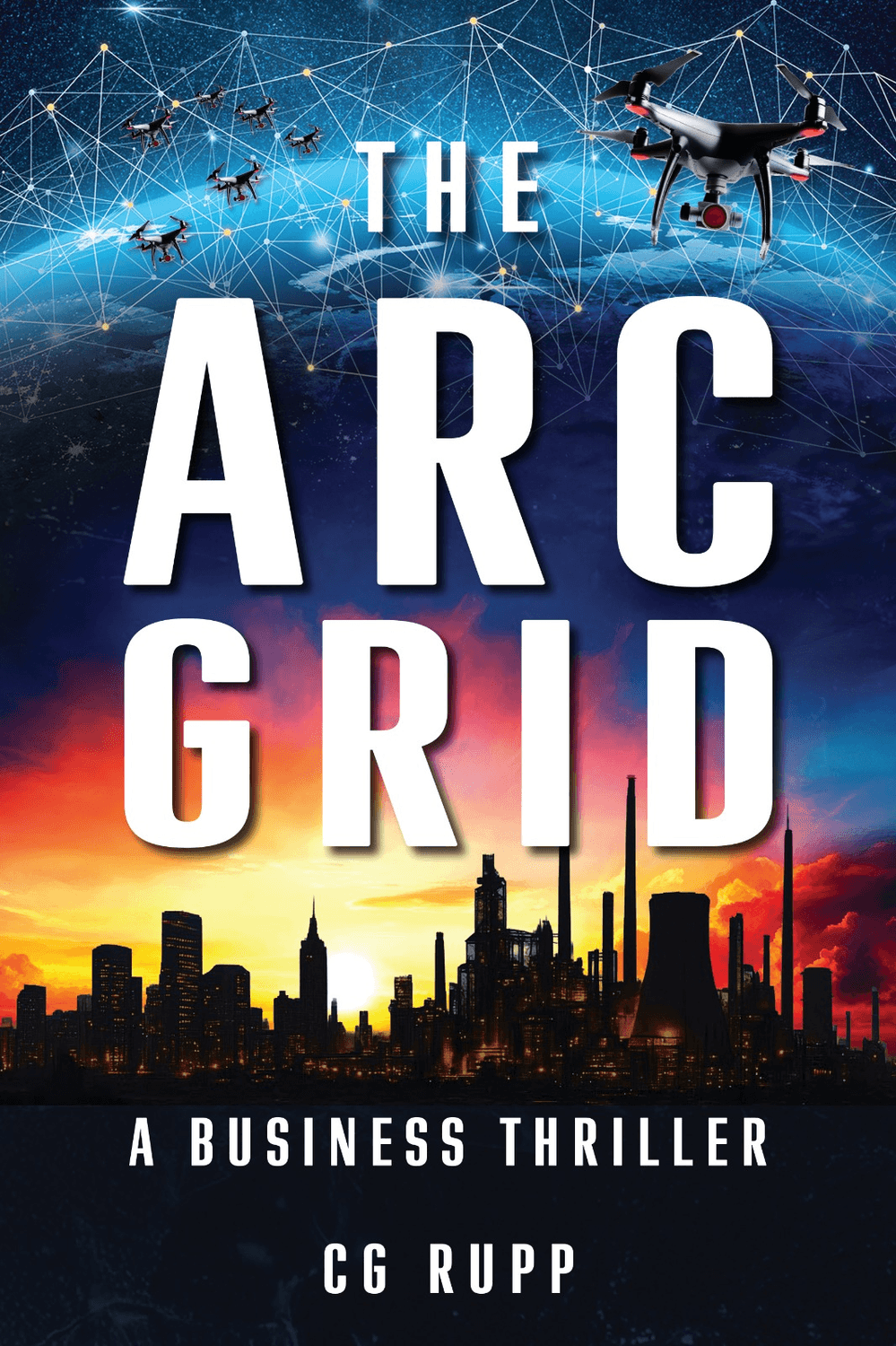
The story needed more room than the pages could give it — so the appendixes live here. Read the highlights below, or take the complete appendixes with you as a free PDF: the economics of onshoring, Adam Smith’s moral architecture, the inner workings of the grid, the cast, and the sources behind the fiction.
Inside the appendixes
Everything beneath the story — six ways down.
Full text — free PDFAppendix A
Manufacturing, Automation, and the Economics of Onshoring
Bringing manufacturing home is slower, costlier, and more structural than headlines suggest. This appendix traces how U.S. manufacturing employment fell from roughly a third of the nonfarm workforce in the early 1950s to a fraction of that today, and why industrial capability — factories, tooling, qualified suppliers, trained workers, proven processes — cannot simply be switched back on. Automation changes the math: at roughly $75,000 per year in wages and benefits, U.S. production workers now compete with collaborative robots that can pay for themselves in months, and real NIST MEP case studies show it happening. But automation reshapes work more than it restores it. The appendix closes on the tension at the heart of the novel: some jobs return, others transform, and capital, knowledge, and time remain the true constraints. The ARC Grid is fiction; the manufacturing constraints behind it are not.
Read the full appendix in the PDFAppendix B
Adam Smith and the Moral Architecture of The ARC Grid
Adam Smith is often reduced to self-interest and the invisible hand, but he was a moral philosopher first. This appendix recovers the fuller Smith — The Theory of Moral Sentiments alongside The Wealth of Nations — and shows how his worldview becomes the ethical spine of the novel. Eight principles structure the argument: markets depend on trust, justice, and fair rules; profit is necessary but not a moral license; competition must be protected from its own concentration; markets require moral restraint, not just rules; efficiency has human consequences; and more. Linda Wyatt and NovaVolt do not reject markets, competition, self-interest, or profit — they depend on them. What they reject is the concentration and manipulation of economic and political power that prevents markets from functioning as markets. That distinction is where the story’s villains and its heroes finally separate.
Read the full appendix in the PDFAppendix C
How the ARC Grid Works
An Open, Plug-and-Play Architecture for a Modern U.S. Power Grid
The U.S. power grid was built for one-way energy flow from large central generators, and bolting millions of new resources onto it is slow and contentious. The fictional ARC Grid — Adaptive, Resilient, Coordinated — takes a different approach: it does not replace the physical grid, it adds an open digital and market architecture layered on top, built from technologies that already exist — edge computing, cloud services, secure communications, and standardized interfaces. Six components make up the ecosystem: the ARC Network, ARC Data Centers, ARC-LINK, ARC Prime, the ARC Grid itself, and cyber-physical defense — each described with what it does and why it matters. Together they target resilience, efficiency, integration, transparency, competition, security, and adaptability, without tearing out existing infrastructure. The closing line is the thesis of the whole novel: the fiction is not that these capabilities exist — it is that someone finally put them together.
Read the full appendix in the PDFAppendix D
Responsibility Without Innocence
ExxonMobil CEO Darren Woods argues that the energy transition ultimately depends on what society is willing to pay for it. There is truth in that — but it raises the harder question this appendix pursues: where does responsibility reside when everyone is responding rationally to incentives, yet the system produces an outcome no one claims to want? Working through consumers, producers, governments, investors, and capital, it shows how harm can emerge without a villain — one of the central lessons of systems thinking. Knowledge changes the equation: documented research shows Exxon’s own scientists understood climate risks decades ago, so responsibility cannot be assigned solely at the point of consumption. And the economics eventually shift — technology, policy, capital, and climate damage itself change what counts as rational. Blame asks whose fault it is; systems thinking asks who can change the outcome. Black Meridian is the extreme case.
Read the full appendix in the PDFAppendix E
Cast of Characters
Twenty-nine named characters keep The ARC Grid’s world turning, and this appendix is the reference card: who they are, what they run, and where they stand. Entries span the NovaVolt executive team and board, the engineers and operators keeping ARC-LINK honest, the analysts and officials inside agencies and capitals, journalists and activists chasing the story, and the shadow network working against all of it. Each one gets a name, a role, and a two-line brief on what that person wants and what stands in the way — from supplier qualification and grid-resilience analysis to legal strategy, plant security, political theater, and covert market manipulation. Nothing here is required reading before Chapter 1. It is built for mid-read checkpoints and post-read refreshers: a quick way to remember who does what, who answers to whom, and who prefers to stay invisible until it matters.
Read the full appendix in the PDFAppendix F
Research Notes & Sources
The novel is fiction; the systems around it are not. This appendix catalogs the principal research behind the story, organized by subject rather than page number so readers can check any scene against the real world. Seven groups cover manufacturing, onshoring, and automation; Adam Smith, markets, and concentrated power; the technology behind the ARC Grid; cybersecurity and cyber-physical resilience; drones and critical-infrastructure threats; climate, markets, and distributed responsibility; and systems thinking, flow, and delayed consequences. The sources range from NIST and Department of Energy program documents to CISA guidance, NERC reliability standards, MITRE ATT&CK for ICS, GAO reports, FAA drone rules, and the historical record of ExxonMobil’s climate communications — with DOIs and stable URLs throughout. A closing note on fiction and fact draws the line precisely: no real person or company is the model for NovaVolt or Black Meridian, but every pressure in the plot is real.
Read the full appendix in the PDF“The fiction is not that these capabilities exist. It is that someone finally put them together.”
The ARC Grid · Appendix C